
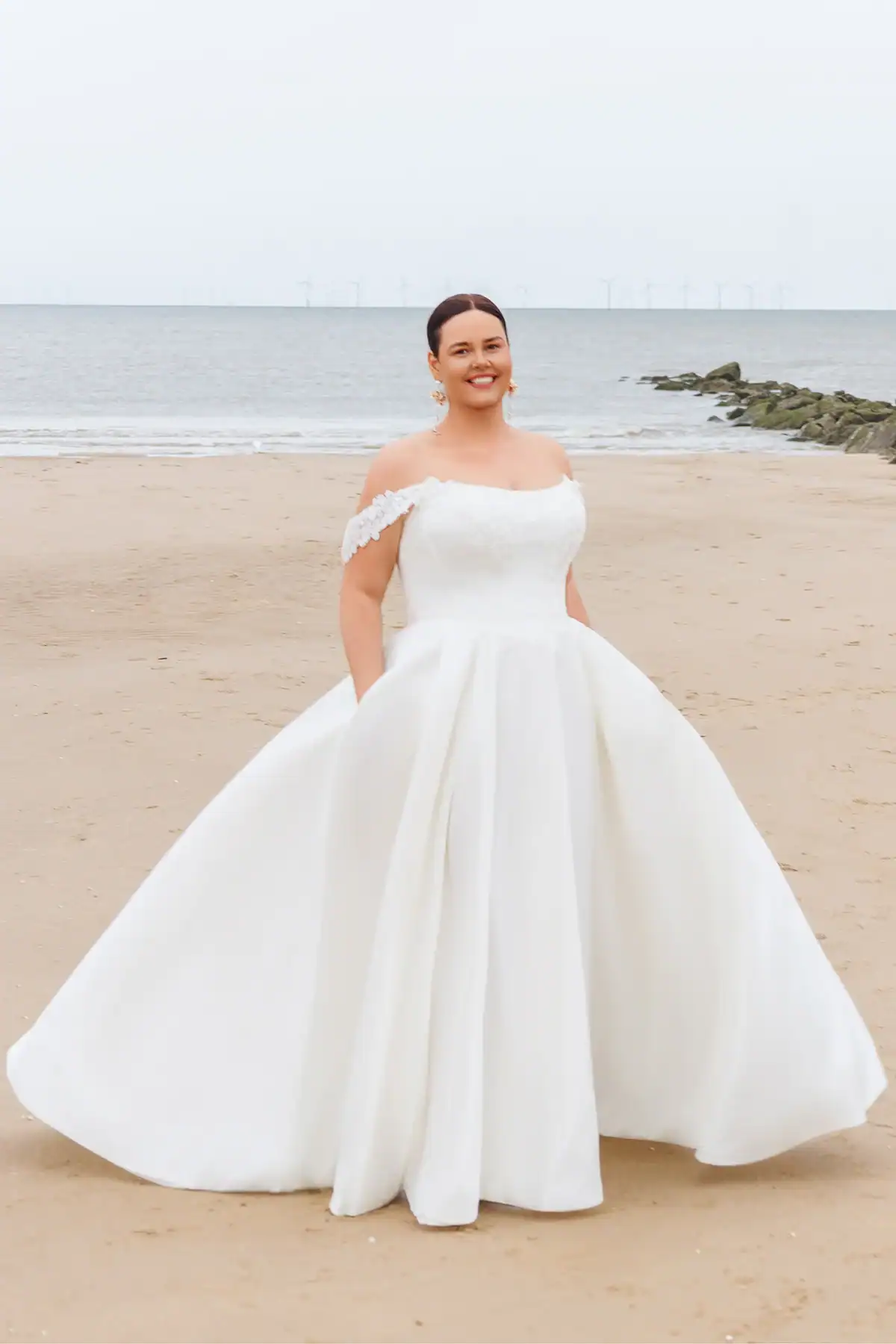
Shopping for a wedding dress should be about discovering what makes you feel like yourself, not wondering whether a boutique will have anything you can try. For plus size brides in Kent, the most useful first step is choosing a shop that can show you real gowns, offer thoughtful fitting advice and give you room to make a decision at your own pace.
If you are researching plus size wedding dress shopping in Kent, this guide explains what to expect from an inclusive bridal appointment, how bridal sizing works, which silhouettes you can explore and what to ask before ordering. It also explains how the experience works at Bijou Bridal Studio, a family-run bridal boutique in Faversham.
A good plus size bridal appointment should feel like a styling consultation, not a test you have to pass. Your consultant should ask about your venue, date, budget, personal style and comfort preferences before suggesting gowns. You should also be able to say what you do and do not want to wear without being pushed towards a particular “flattering” shape.
At Bijou Bridal Studio, brides can browse around 200 wedding dresses in private bridal suites, with gowns available in sizes 6–32. The boutique stocks designers including Rebecca Ingram by Maggie Sottero, Eddy K, Sophia Tolli and Morilee. That range gives you the opportunity to compare fabrics, necklines and silhouettes in person rather than trying to decide from photographs alone.
Bijou describes its experience as relaxed and no-pressure, with private suites and appointments lasting up to two hours. You can bring up to three guests, which is enough for a small, trusted group without turning the appointment into a crowded audience. The right guests are people who will listen to your preferences and help you notice how you feel in a dress, rather than choosing for you.
The boutique also welcomes weekday walk-ins from Wednesday to Friday, while weekends are appointment-only. Even when a walk-in is possible, booking ahead is sensible if you want dedicated time, a private suite and the best chance of trying specific styles. You can request a bridal booking before travelling to Faversham.
This is one of the most important questions to ask before visiting a plus size bridal shop in Kent. “We can order your size” is not the same as “we have gowns in your size to try”. Both options can be useful, but the distinction affects how confidently you can assess a dress before committing.
Bijou Bridal Studio states that it offers gowns in sizes 6–32, including plus size dresses available in-store. Its collection page includes examples such as size 30, size 32, US16, US18, size 26 and size 28 samples across different designs. Availability changes as gowns are sold, reordered or added, so it is still worth mentioning your preferred size and styles when you book.
A sample does not have to fit perfectly to teach you something. A skilled consultant may clip or pin a gown to demonstrate its shape, but you should never be expected to squeeze into a sample that is uncomfortably small. Ask whether the shop can show you the construction, support and proportions of a gown in a more suitable size, or whether another dress can demonstrate the same silhouette.
Wedding dress labels can differ from the size you normally buy. Designers use their own measurement charts, and a gown may be ordered according to your largest relevant measurement rather than a single number. Maggie Sottero explains that a stylist may order for the larger measurement when bust, waist and hip measurements fall into different size brackets; the dress can then be altered where necessary.
This is a technical decision, not a judgement about your body. The label inside a gown does not define how you look in it, and it is not a score. Focus on the garment’s actual fit, movement and comfort. Your consultant should explain the measurements clearly and let you take time to process the information.
For further background, read Maggie Sottero’s practical guide to wedding dress alterations and sizing. It is an external resource, so your boutique’s advice and the selected designer’s chart should remain the final reference for your order.
There is no universally correct silhouette for a plus size bride. The best shape is the one that supports the look you want and lets you move, sit and celebrate comfortably. Trying more than one silhouette is often the fastest way to replace an abstract idea of what will suit you with real information about what you enjoy wearing.
An A-line bodice that opens gradually into the skirt is a versatile starting point because it can be made from lightweight tulle, structured mikado, lace or satin. The amount of volume, the position of the waist and the neckline all change the effect. At Bijou, the plus size collection includes romantic lace A-lines, simple satin designs, sparkle tulle and options with sleeves or detachable details.
Fit and flare gowns follow the body through the bodice and upper skirt before opening towards the hem. Mermaid designs create a more pronounced flare lower down. These shapes can be particularly helpful if you want to highlight construction, lace placement or a defined train, but comfort and movement matter as much as the visual line.
Ask to walk, sit carefully and take a few steps in each gown. Check whether the neckline stays where you want it, whether the back gives enough ease and whether you can imagine wearing the dress for several hours. A consultant can explain whether a corset back, boning or a stretch panel affects the fit, but your own comfort is the deciding factor.
If you want a dramatic entrance, a plus size ballgown can create volume through layers of tulle, lace or satin. If you prefer more coverage, look for wide straps, sleeves, an illusion neckline or a detachable jacket. Bijou’s collection includes gowns with bishop sleeves, lace straps, off-the-shoulder details and removable sleeves or over-jackets, so you can consider different levels of coverage without limiting yourself to one style.
Try a detail in context. A sleeve may change how you move your arms; a veil may balance a heavily detailed bodice; a detachable layer may give you two looks for the ceremony and reception. The goal is not to disguise your shape. It is to build an outfit that reflects your taste, venue and practical needs.
A plus size wedding dress fitting is a conversation as much as a measurement exercise. Your consultant should establish what you need from the dress: support, flexibility, coverage, a particular neckline, room to move or a specific aesthetic. If you have had a negative experience with clothing shops before, you can say so. You are allowed to request a slower pace, more privacy or clearer explanations.
During the appointment, the team may use clips or temporary adjustments to show how a gown could look in a different size or after alterations. This is useful for visualising the intended shape, but it is not a promise that every adjustment is possible. Ask what would be changed, who would carry out the alterations and when the fitting process would begin.
Bijou’s collection includes both off-the-peg gowns and new gowns to order. An off-the-peg gown may be available to take home on the day if the size and condition are right. A made-to-order gown is produced for you and normally follows the designer’s ordering and delivery timetable. These routes suit different wedding dates and budgets, so compare them rather than assuming one is automatically better.
If the exact sample size is not available, ask whether the gown can be ordered, whether a nearby size can be clipped safely for demonstration and which measurements will determine the final order. You can also ask to see a similar design in your size, because it may reveal how that designer’s bodices, skirts and fabrics feel on your body.
Never choose a size based only on hope that your body will change before the wedding. Your consultant can discuss the designer’s chart and alteration allowance, while you can make a decision based on the information available now. If your plans change later, communicate early with the boutique and seamstress.
You do not need a complete wedding-day beauty look. Wear underwear that makes you feel comfortable and gives you a useful idea of the support you prefer. A smooth, neutral bra can be helpful for some necklines, but do not buy special shapewear simply for the appointment unless you already want to wear it. Your dress should be assessed on your real body, not on an outfit you find restrictive.
Bring your wedding date, venue details, a realistic budget and a short list of styles you are curious about. A few saved images can help explain a neckline or fabric, but keep the list flexible. It is also useful to bring shoes with a similar heel height to the one you may wear, although you can usually begin with the boutique’s own shoes or a barefoot assessment.
Bijou recommends booking a bridal appointment around 12 months before the wedding where possible. Its guidance explains that a made-to-order gown may take around four to six months to arrive, followed by alterations commonly beginning around two to three months before the wedding. These timings can vary by designer, season and the complexity of the alterations, so confirm the current estimate before placing an order.
A shorter timeline does not mean you have to abandon your preferred style. Ready-to-wear stock can be a practical route when the gown is available in your size, particularly if you have only a few months to go. Ask about collection, cleaning, storage and alterations before paying, and leave enough time for more than one fitting.
If you are still at the research stage, Bijou’s article on when to start looking for your wedding dress explains how ordering and alterations fit into the wider planning calendar.
Budget for the full outfit rather than the gown alone. Alongside the dress, you may need alterations, a veil, jewellery, shoes, underwear, a belt or detachable sleeves. Ask whether the quoted price is for an off-the-peg gown or a new order, and whether any accessories or alterations are included.
Bijou Bridal Studio lists wedding dresses from £500 to £3,000, giving brides a clear starting range across its wider collection. The final price depends on the designer, fabric, construction and whether you choose a ready-to-wear gown or order a new one. Set a private upper limit before you begin trying on dresses; this protects you from falling for an option that does not fit your plans.
The boutique also runs designer events, sample sales and special bridal appointments during the year. Its events page lists current opportunities and advises booking in advance because spaces can be limited. An event can be a useful way to see a new collection or gather ideas, but a standard personal appointment may be better if you need detailed fitting advice.
Before booking, look for evidence rather than relying on a vague inclusivity statement. Check the published sample-size range, ask which sizes are currently available to try and confirm whether the boutique works with both ready-to-wear and made-to-order gowns. Ask about private changing space, guest numbers, accessibility, appointment length and the process for alterations.
The boutique’s own plus size wedding dresses in Kent page is the best place to review its current collection details, while the full wedding dress collection shows the wider range of silhouettes and designers. These pages can help you arrive with informed questions without turning your appointment into a fixed shopping list.
Most importantly, notice how the team speaks to you. A supportive consultant will ask what you want, explain what is possible and give you space to decide. Google’s current guidance on creating helpful, reliable, people-first content is written for publishers, but its central principle is relevant here too: useful experiences are built around real people, not empty promises.
You do not need to know your perfect silhouette before you book. Start with a boutique that can show you a meaningful range of sizes and styles, explain the difference between an in-store sample and a new order, and make the fitting feel calm and respectful.
At Bijou Bridal Studio in Faversham, you can explore around 200 gowns in sizes 6–32, compare off-the-peg and made-to-order options, and try different looks with a small group of people you trust. When you are ready, request your bridal appointment and begin with an open mind. The right dress is not the one that follows a rule about your body; it is the one that lets you feel fully present on your wedding day.
Leave a Reply