
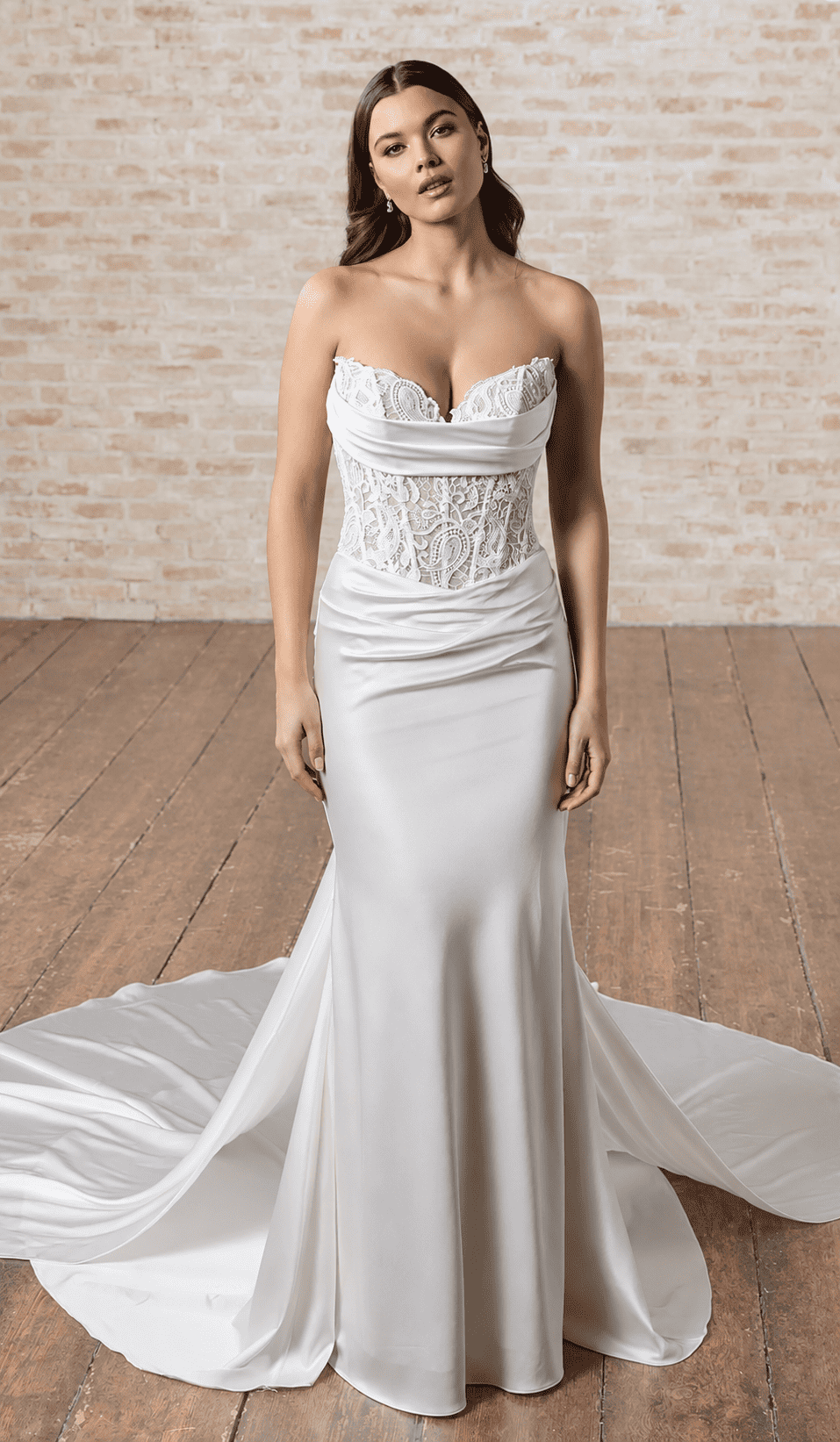
Choosing a wedding dress is exciting, but the buying route can affect your whole planning calendar. Should you choose an off-the-peg wedding dress that is already in the boutique, or order a new gown from a designer’s collection and wait for it to arrive? The answer depends on your wedding date, the dress you love, your size, your alteration needs and how much flexibility you have.
At Bijou Bridal Studio in Faversham, brides can explore both options in one appointment. The boutique has more than 200 gowns, sizes 6–32 and collections from Eddy K, Sophia Tolli, Rebecca Ingram and Morilee. This guide explains the difference between off-the-peg and made-to-order wedding dresses so you can make a calm, informed decision.
An off-the-peg wedding dress is an existing gown held by the boutique. If it is available in the right size and condition, you may be able to purchase it and take it home on the day. It may be a sample gown that has been tried on, so the boutique should explain its condition and any cleaning or finishing needed before your wedding.
Both routes can lead to a beautiful, designer wedding dress. The key difference is when the gown becomes available and how much time remains for fitting, alterations and final preparation.
If your wedding is within the next few months, an off-the-peg gown is often the more practical starting point because it may be available immediately. If your wedding is around a year away, made-to-order gives you more time to choose a design and wait for production. Neither option is automatically better; the right choice is the one that fits your date and the actual gown you want.
| Option | Best suited to | Main advantage | Important consideration |
| Off-the-peg | Shorter engagements or brides who love an available gown | Immediate availability and possible same-day collection | It may be a sample and still needs checking, cleaning and alterations |
| Made-to-order | Brides with several months available before the wedding | A newly ordered gown from the designer collection | Delivery time varies and alterations still follow |
| Bespoke | Brides seeking a custom design | A gown developed around an individual brief | A different process, budget and timeline from either retail route |
Bijou Bridal Studio says many of its bridal gowns are available off the peg and can be taken away on the day, subject to availability. Its current collection includes a wide range of silhouettes, from A-line and ballgown styles to fitted, lace and satin designs. That means ready-to-wear does not have to mean a limited or generic look.
The clearest advantage is time. You are not waiting for a new gown to be produced and shipped, so this route can work well for a short engagement or a wedding date that has moved closer than expected. It can also make your budget easier to plan because you are deciding on a specific gown that you can inspect in person.
You can assess the actual fabric, colour, train, fastening and finish rather than relying on a sample photograph. If you fall in love with a gown that is already the correct size, you may be able to move quickly from decision to collection. This can remove a great deal of uncertainty for brides who would rather have the dress safely in hand.
An off-the-peg dress is not automatically second-best, but it deserves a careful inspection. Ask how often it has been tried on, whether any beading or lace needs attention, whether it will be professionally cleaned and when you can take it home. Look at the hem, underarm area, zip or corset back and any detachable details.
Ask the boutique to explain the alteration plan before you commit. A sample may be slightly longer, shorter, wider or narrower than your ideal fit. A skilled seamstress may be able to adjust the garment, but not every change is possible on every fabric or construction. The important question is not only “Can I have it now?” but also “Can it be made wedding-ready in my timeframe?”
With a made-to-order gown, your consultant helps you choose a design and the appropriate designer size. The order is then placed, the gown is produced or supplied, and the boutique contacts you when it arrives. After that, you arrange alterations so the finished dress works with your body, shoes and desired hem length.
Bijou’s current wedding dress guidance recommends booking an appointment around 12 months before the wedding where possible. It explains that a made-to-order gown may take around four to six months to arrive, with alterations normally beginning around two to three months before the wedding. These are planning estimates rather than promises: the designer, gown, season, stock position and shipping arrangements can all affect the schedule.
Before paying a deposit, ask for the current expected delivery window in writing and tell the boutique your exact wedding date. If your date is less than six months away, do not assume a standard production estimate will apply. The team may recommend an available gown, a quicker supplier option or a design that can realistically be completed in time.
This is a common point of confusion. A designer normally uses a standard size chart, and the boutique selects the size that best accommodates your key measurements. The dress is then adjusted by a seamstress. Alterations may include taking in or letting out certain seams where possible, hemming the skirt, adjusting straps, refining the neckline or adding a bustle.
Bridal sizing can differ from high-street sizing, so try not to compare the number on a wedding dress label with your everyday clothing. The label is used to match a designer’s chart; it is not a judgement about your body. The Maggie Sottero guide to wedding dress alterations and sizing explains why stylists may order for the larger measurement when your bust, waist and hip measurements fall into different size brackets.
There is no single delivery time that applies to every gown. A useful working estimate is several months for production, followed by time for alterations, but the exact window must be confirmed with the boutique and designer. Bijou’s published article gives an approximate four-to-six-month arrival period for many orders, while also advising brides to begin the wider process around a year before the wedding.
Allowing time for alterations is essential. Receiving a dress is not the same as having a dress ready for the ceremony. You may need an initial fitting, one or more adjustment appointments, a hem check with your wedding shoes and a final fitting. Complex lace, structured bodices, sleeves, beading, bustle points or major length changes can affect the work involved.
Around 12 months before the wedding: begin appointments, compare designers and decide whether you prefer an existing gown or a new order. This is the most comfortable window for made-to-order shopping because you have time to consider the decision without rushing.
Around six to nine months before the wedding: a made-to-order gown may still be possible, but confirm the supplier’s current lead time before ordering. An off-the-peg gown can provide more flexibility if the delivery window is tight.
Around three to four months before the wedding: prioritise gowns that are available or have a clearly confirmed route to delivery. Book alterations as soon as the dress is secured, because seamstresses can become busy during peak wedding seasons.
One to two months before the wedding: complete the main fittings, check your shoes and underwear, and confirm how the dress will be stored and transported. Leave a small buffer for adjustments rather than planning the final fitting immediately before the ceremony.
For a wedding in one to three months, an off-the-peg wedding dress is usually the safer route because the gown is already available. Bijou’s existing guidance specifically notes that brides with one, two, three or four months before their wedding can often find a ready-to-wear gown and take it home the same day if the dress is available in their size. You still need to allow time for alterations.
For four to six months, both routes may be possible, but the decision should be based on the exact dress and confirmed delivery information. A made-to-order gown may arrive in time in some cases, while an off-the-peg gown removes production uncertainty. This is a useful point at which to book a personal consultation rather than trying to solve the decision from generic online estimates.
For nine to twelve months or more, you have the widest choice. You can compare a new order with available samples, explore several designers and decide whether the anticipation of a made-to-order gown is worth the wait. A longer timeline is helpful, but it does not require you to order; you may still choose a ready-to-wear dress because it is the one you love.
Yes. Off-the-peg gowns can often be altered, and alterations are common for both purchasing routes. The work depends on the construction and on how much change is needed. A hem, strap adjustment or bustle is different from reshaping a structured bodice, changing a neckline or adding sleeves.
Take the dress to an experienced bridal seamstress and share the boutique’s notes about the gown. Try it on with the shoes and underwear you expect to wear. If you are buying close to the wedding, ask the seamstress for an honest assessment of what can be completed, how many fittings are needed and whether the dress should be held at the boutique until the work begins.
The purchasing route is only half of the decision. Designers also have distinct approaches to fabric, structure and detail. Bijou’s Eddy K wedding dress collection introduces a luxury designer range with A-line, fitted, lace and satin options. Its Sophia Tolli collection includes romantic lace, crepe, tulle, beading and structured gowns.
The Rebecca Ingram collection features statement details, bows, slits, lace sleeves, A-lines and fit-and-flare shapes. The Morilee collection includes ballgowns, corset bodices, A-lines, satin and lighter fitted styles. Availability varies, so use these pages to identify design directions, then ask which specific samples are currently in store.
When comparing gowns, note more than the label. Write down the silhouette, fabric, size tried, price, lead time and likely alterations. A dress that looks perfect online may feel different from the gown that gives you the movement, support and confidence you want in person.
Take these questions to your appointment: Is this gown available off the peg in my size? If it is a sample, what condition is it in? Can I take it home on the day? If I order a new gown, what is the current estimated delivery window? When should alterations start? What happens if the delivery is delayed? Which accessories or modifications are included, and which cost extra?
Also ask what happens if your wedding date is brought forward, your venue changes or your measurements change. A good consultant will not promise what cannot be guaranteed. They will explain the realistic options and help you choose a route that leaves enough time for the final fitting.
Online research is useful for learning designers and saving ideas, but it cannot show you how a gown feels when you sit, walk or lift your arms. A personal appointment lets you compare an off-the-peg sample with gowns that can be ordered, often on the same visit. It also gives you a chance to discuss sizing, delivery and alterations in the context of your own date.
Bijou Bridal Studio is a family-run boutique in Faversham with private bridal suites and a relaxed, no-pressure approach. Weekday walk-ins are available from Wednesday to Friday, while weekends are appointment-only. You can request a bridal booking and tell the team how soon your wedding is so they can prepare relevant options.
If you feel overwhelmed by the number of choices, Bijou’s advice in finding your dream wedding dress is to remain open to gowns that may look different on the hanger. That is especially useful when comparing purchasing routes: the best off-the-peg or made-to-order choice may be the dress that feels right, not the category you expected to choose.
Choose off the peg when you need speed, want to see the exact gown before buying or have found an available dress that already feels like the one. Choose made to order when your date allows several months for delivery, you want a new gown from a designer collection and you are comfortable planning alterations after it arrives.
If you are unsure, do not make the decision from a delivery estimate alone. Compare the actual gown, the available size, the alteration plan, the confirmed supplier timeline and the amount of buffer before your wedding. Bijou Bridal Studio can help you explore both options across more than 200 gowns, including sizes 6–32 and collections from Eddy K, Sophia Tolli, Rebecca Ingram and Morilee.
When you are ready to see what is available, browse the full wedding dress collection and then book a personal appointment. A calm comparison now can give you the most important thing in the final weeks before your wedding: confidence that your dress, fittings and finishing details are all on track.
Google’s official guidance on optimising for generative AI features reinforces a simple principle for useful search content: provide clear, original answers that help people make decisions. That is the purpose of this guide, and it is the same approach worth taking when choosing your dress.
Leave a Reply