
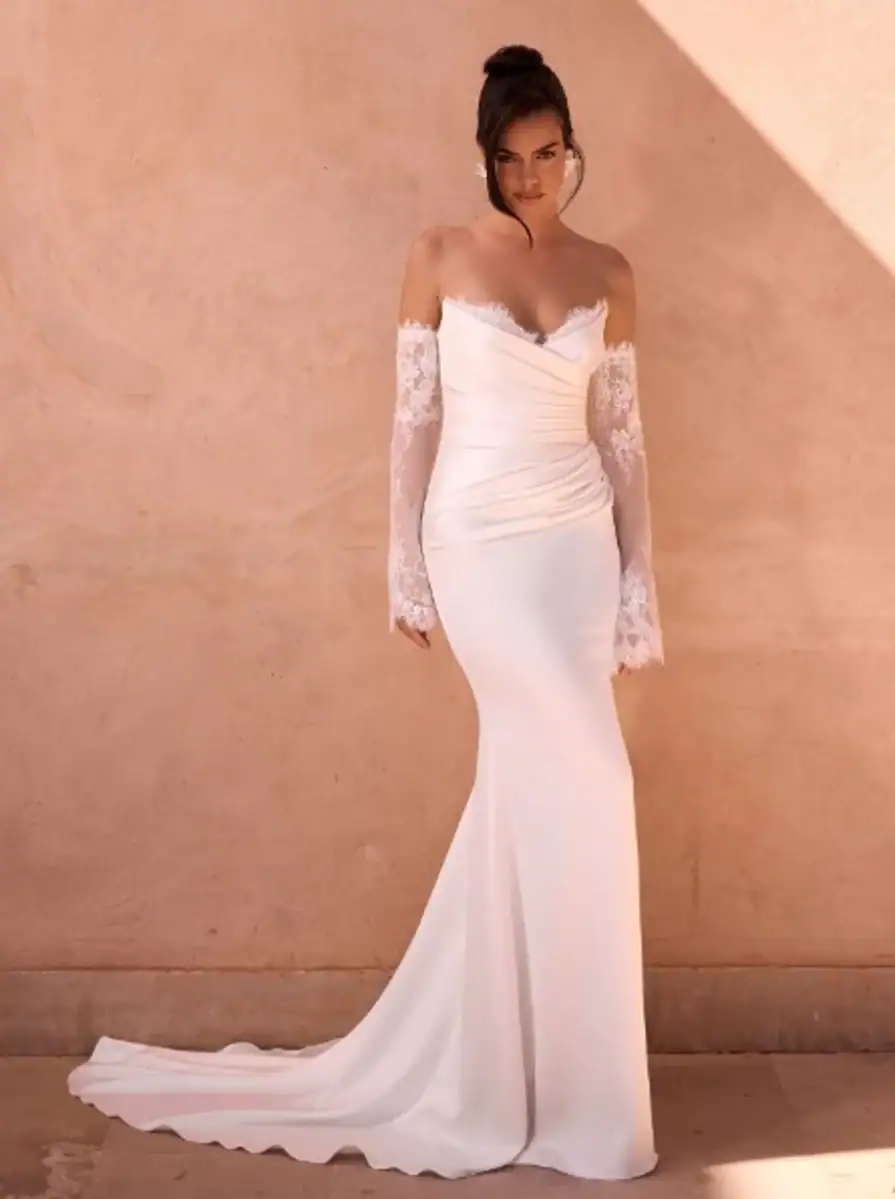
Understanding wedding dress shapes makes bridal shopping much less overwhelming. A gown can look completely different depending on where the skirt begins to widen, how much structure sits through the bodice and how the fabric moves around your legs. Once you know the basic wedding dress silhouettes, you can describe what you like and make your appointment more productive.
The four shapes in this guide are A-line, mermaid, ball gown and fit-and-flare. They are not rules about which bodies can wear which dresses. They are construction terms that help you compare volume, movement and proportion. The best silhouette is the one that supports your personal style and feels comfortable enough for the day you have planned.
The main wedding dress shapes describe the outline of a gown from the bodice to the hem. An A-line gradually widens from the waist, a ball gown creates a fuller skirt, a mermaid stays close to the body before flaring low down, and a fit-and-flare opens earlier for a softer transition.
Neckline, sleeve, fabric, waistline and train can change the character of every silhouette. A lace A-line may feel romantic, while a satin A-line can look modern and clean. A fitted gown in stretch crepe may move differently from one covered in structured lace. Treat the shape as a starting point, not the complete description of the dress.
| Shape | Where The Skirt Widens | Overall Effect | What To Notice When Trying It On |
| A-line | Gradually from the waist | Balanced and versatile | How the waistline, fabric and train affect movement |
| Ball gown | Strongly from the waist or basque waist | Full, dramatic and traditional | Skirt volume, weight and space around the legs |
| Mermaid | Low on the skirt, near the knee or below | Sculpted and dramatic | Walking, sitting and the position of the flare |
| Fit-and-flare | Earlier than a mermaid, through the lower hip or upper thigh | Fitted with a softer flare | Ease of movement and the transition into the skirt |
An A-line wedding dress has a fitted bodice and a skirt that gradually widens from the waist towards the hem. Its gentle flare creates a clear outline without the volume of a traditional ball gown, making it one of the most adaptable bridal gown silhouettes.
A-lines work across many fabrics. Tulle and lace can create a soft, layered effect, while mikado or satin can hold a cleaner, more architectural line. A fitted bodice, a defined waistband or a basque waist changes where the eye sees the dress begin to open. Sleeves, straps and a detachable jacket can also alter the overall feel without changing the basic silhouette.
An A-line is a useful first shape because it helps you compare details. You can try one gown with a simple satin skirt and another with floral lace, sparkle tulle or a full train while keeping a familiar outline. It also gives you a practical reference point when deciding whether you want more volume or a closer fit.
In Bijou Bridal Studio’s current collection, the A-line examples include lace, satin, tulle, off-the-shoulder, V-neck and long-sleeve designs. Its plus size wedding dress collection includes A-lines in larger sample sizes, alongside fit-and-flare and fitted options. Availability changes, so confirm which particular gown is in store before travelling.
A ball gown wedding dress has a fitted or structured bodice and a noticeably full skirt that begins at the waist. It creates more volume than an A-line and can have several layers of tulle, lace, organza or satin. The result is a formal, statement-making shape that can feel wonderfully traditional or surprisingly modern depending on the bodice.
A full skirt changes the practical experience of wearing a gown. You may need more room when walking between chairs, getting into a car or moving around a busy reception. It can also affect how the train is handled and whether a bustle is needed for dancing. Try taking several steps, turning and sitting carefully during your fitting.
The difference between an A-line and ball gown wedding dress is mainly the amount and position of skirt volume. An A-line widens gradually and usually stays relatively streamlined. A ball gown creates a stronger change at the waist and has a fuller lower half.
A bride who likes the romance of a full skirt but wants less weight can ask about lighter tulle layers or a reduced-volume A-line. A bride who wants a dramatic entrance can explore structured satin, lace or a corset bodice. At Bijou, the Morilee collection includes ball gowns with boning, lace-up corset backs, off-the-shoulder details and pearl or lace decoration.
A mermaid wedding dress follows the body through the bodice and hips before opening into a pronounced flare lower on the skirt. The flare may begin around the knee or below, creating a strong contrast between the fitted upper section and the wider hem.
Mermaid gowns are often chosen for their sculptural effect, but the construction matters more than the label. A corset back, boning, stretch fabric, lining and seam placement all influence support and comfort. Lace placement can emphasise the direction of the shape, while a train can make the silhouette feel even more dramatic from behind.
Walk normally, turn, sit and practise a few dance steps. The lower flare should allow you to move without constantly adjusting the skirt. Notice whether the neckline stays secure and whether the gown feels comfortable when you breathe and lift your arms. If you love the shape but need more ease, ask whether another fabric or a fit-and-flare version offers a similar look.
A mermaid silhouette is not reserved for one body type. It is a design choice for anyone who enjoys a closer fit and a defined flare. You should be able to explore it without being told that your body does or does not qualify for the style.
A fit-and-flare wedding dress is fitted through the bodice and upper skirt, then begins to widen earlier than a mermaid. The flare may start around the lower hip or upper thigh, creating a gradual transition into the hem.
The terms fit-and-flare, trumpet and fishtail can overlap between designers, so look at the actual gown rather than relying only on the product name. In general, a fit-and-flare gives you some of the definition of a fitted wedding dress with more space and movement through the lower skirt than a mermaid.
The main difference between mermaid and fit-and-flare wedding dresses is where the flare begins. A mermaid stays close for longer and opens lower down. A fit-and-flare starts opening sooner, which can make the skirt feel less restrictive when walking or sitting.
There is no universal comfort level because fabrics and construction vary. A stretch crepe fit-and-flare may feel very different from a heavily beaded lace gown. Try both shapes in the same appointment if you are unsure. The comparison will show whether you prefer a sharp, low flare or a more gradual outline.
Bijou’s Rebecca Ingram collection includes fit-and-flare designs with lace sleeves, statement details, slits and structured backs. Its current Sophia Tolli collection also includes fit-and-flare, mermaid, A-line and ball gown examples, making it possible to compare several shapes from one designer family.
Choose a wedding dress shape by considering how you want to look, move and feel. Start with your personal style, then test the gown against your venue, ceremony, season, shoes and plans for the reception. Body-shape rules can be restrictive; comfort, confidence and genuine preference are more useful guides.
Think through the moments that matter to you. Will you walk across grass, climb stairs, sit for a long meal, dance for several hours or travel between venues? A full skirt may be worth the extra space because you love the drama. A fitted silhouette may be perfect if you want the outline of the dress to stay close while you move.
Do not judge a gown only while standing still in front of a mirror. Walk at different speeds, turn sideways and sit with care. Ask the consultant whether the hem, train or bustle will change the way the dress behaves later. These small checks often reveal more than a photograph.
Fabric affects how a silhouette hangs. Tulle can create layers and movement without the same visual weight as heavy satin. Mikado and other structured fabrics can hold a crisp A-line or ball gown. Crepe usually follows the body more closely, while lace can add texture and change how the edges of a skirt are seen.
The same shape can therefore suit very different wedding aesthetics. A simple A-line in satin may work for a modern city venue, while an embroidered tulle version may feel at home in a garden setting. Let the fabric, neckline and detail guide the final impression as much as the outline.
A venue can provide useful context, but it should not dictate your dress. A ball gown can look beautiful at a relaxed countryside celebration, and a fitted gown can feel right in a grand hotel. Consider the floor, stairs, weather, space and transport, then choose the dress that makes you excited rather than trying to follow a strict formula.
Try at least two contrasting silhouettes if the boutique has them available. An A-line and a fit-and-flare can show you whether you prefer movement or definition. A ball gown and an A-line can clarify how much volume feels right. A mermaid and a fit-and-flare can reveal how low you want the flare to begin.
Bring a few reference images, but do not treat them as a fixed brief. A photograph may show a neckline or fabric you like without showing how the gown feels when worn. A relaxed consultant can help you translate “romantic”, “modern”, “simple” or “dramatic” into gowns worth trying.
Bijou Bridal Studio describes its appointments as relaxed and no-pressure, with private bridal suites and a large collection of more than 200 gowns. The boutique offers sizes 6–32 and is family-run in Faversham, Kent. You can browse the full wedding dress collection before your appointment, then ask which shapes and sizes are currently available.
Designer collections can help you compare how different brands interpret the same silhouette. Eddy K wedding dresses at Bijou include luxury designs across A-line, fitted, lace and satin directions. Sophia Tolli gowns range from soft A-lines and detailed lace to mermaid, fit-and-flare and modern ball gown styles.
Rebecca Ingram wedding dresses bring together playful details, bows, slits, lace sleeves, A-lines and fitted shapes. Morilee wedding dresses include full ball gowns, corset bodices, satin A-lines and fitted gowns. These pages are useful for inspiration, but specific sample availability can change as stock arrives and gowns are sold.
Bijou recommends booking a bridal appointment around 12 months before the wedding where possible. Its existing timing guidance explains that a made-to-order gown may take around four to six months to arrive, followed by alterations that normally begin around two to three months before the wedding. An off-the-peg gown may suit a shorter timeline, but it still needs a fitting and finishing plan.
Starting early is not a requirement for having a good appointment. It simply gives you more time to compare silhouettes, order a new gown if needed and arrange alterations. If your wedding is only a few months away, tell the boutique your date before you visit so the team can focus on realistic options.
For more planning context, read Bijou’s guide to when to start looking for your wedding dress.
Limit your first appointment to questions you can answer by trying the gown on: Do I like the outline? Can I move comfortably? Does the fabric feel right? Do I enjoy the neckline and waistline? Does the dress suit the way I want to spend my wedding day? You do not have to decide your entire bridal identity from one visit.
It can also help to stop using “flattering” as the only test. A dress may look beautiful because it expresses your style, creates the movement you want or makes you feel present and confident. Bijou’s article on finding your dream wedding dress encourages brides to stay open because the gown that feels right may not be the one they expected.
A-line, ball gown, mermaid and fit-and-flare are useful terms, but the best decision happens when you see how a particular gown fits and moves on you. Compare where the skirt opens, how the fabric behaves, how the waistline feels and whether you can imagine wearing the dress from ceremony to final dance.
If you are shopping in Kent, you can request a bridal appointment at Bijou Bridal Studio. Weekday walk-ins are available from Wednesday to Friday, while weekends are appointment-only. The boutique also lists designer events and special experiences on its events page, although booking ahead is recommended for limited spaces.
Google’s official guidance on optimising for generative AI features continues to emphasise useful, original, well-organised information rather than special search “hacks”. For a bride, that means a clear silhouette guide should leave you with better questions, not more pressure. Start with curiosity, try more than one shape and choose the gown that feels like your wedding day.
Leave a Reply